 Heater-Cooler
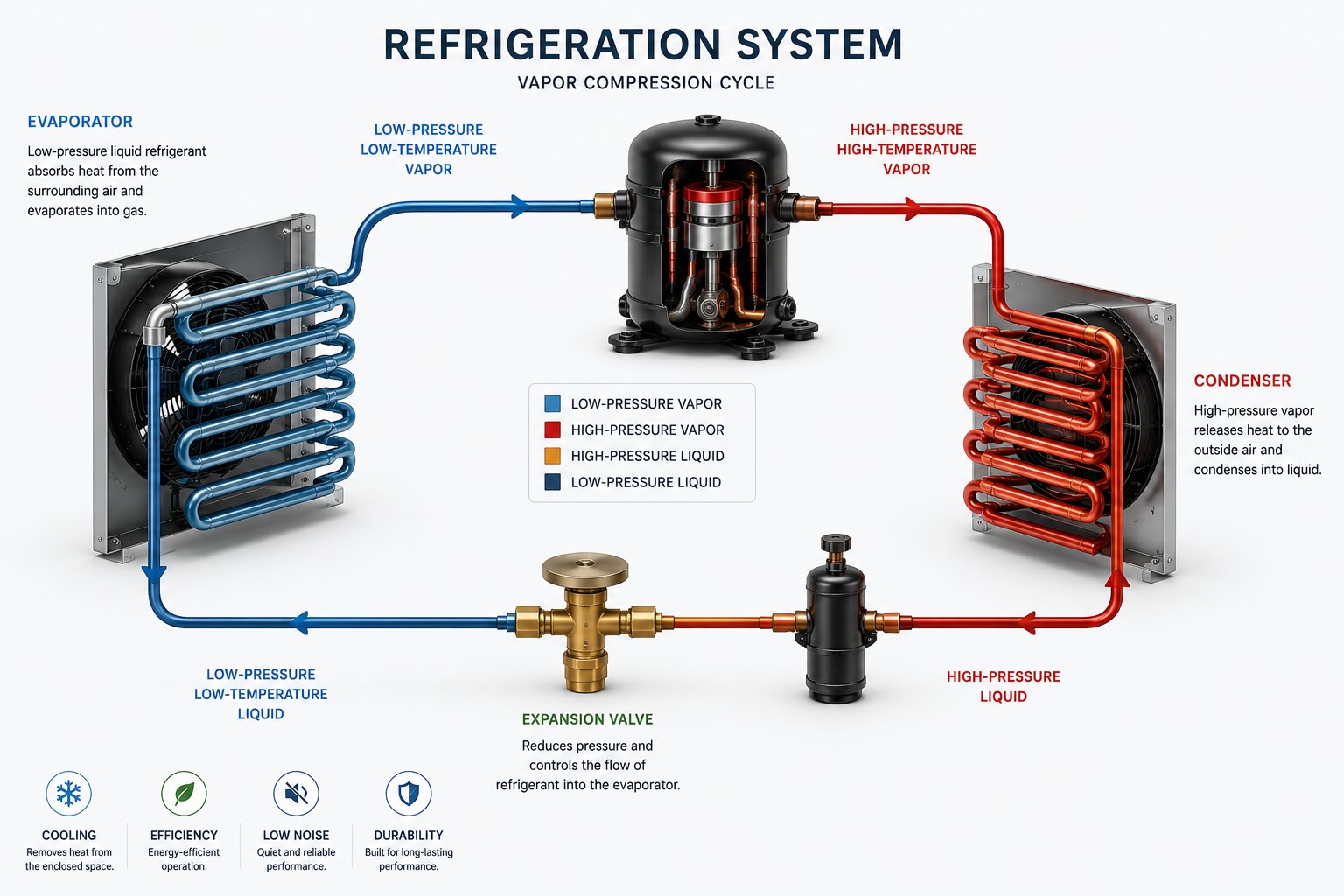
The refrigeration cycle is one of the most important processes used in air conditioning systems, refrigerators, freezers, cold storage facilities, and ice-making machines. The main purpose of this cycle is to transfer heat from a colder area to a warmer one. Contrary to popular belief, refrigeration systems do not create cold; instead, they remove heat from the desired space and release it into the surrounding environment.
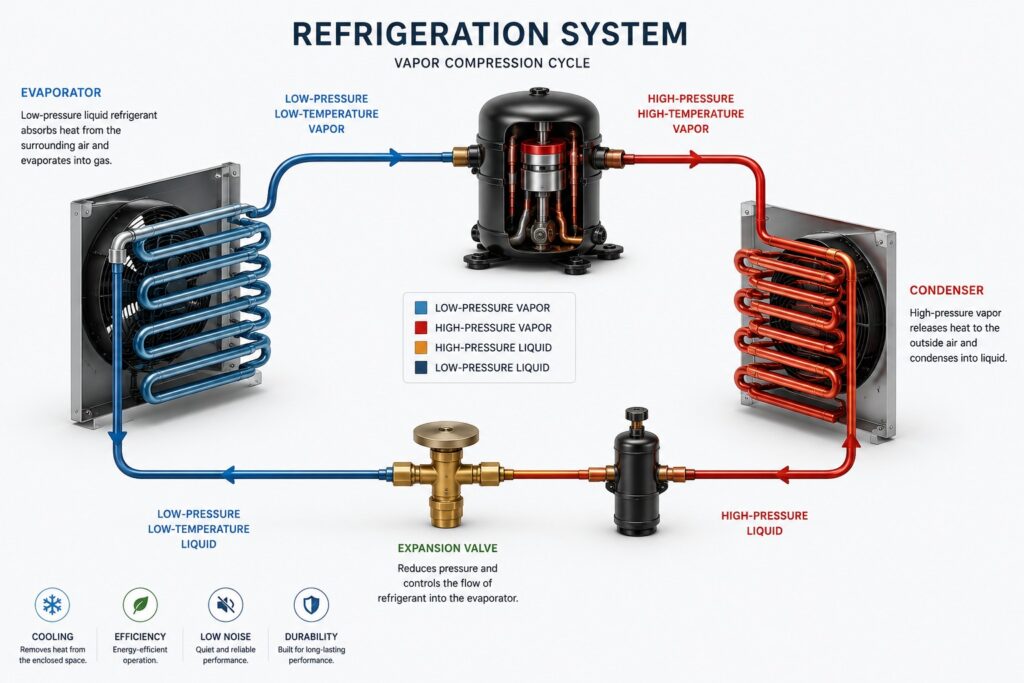
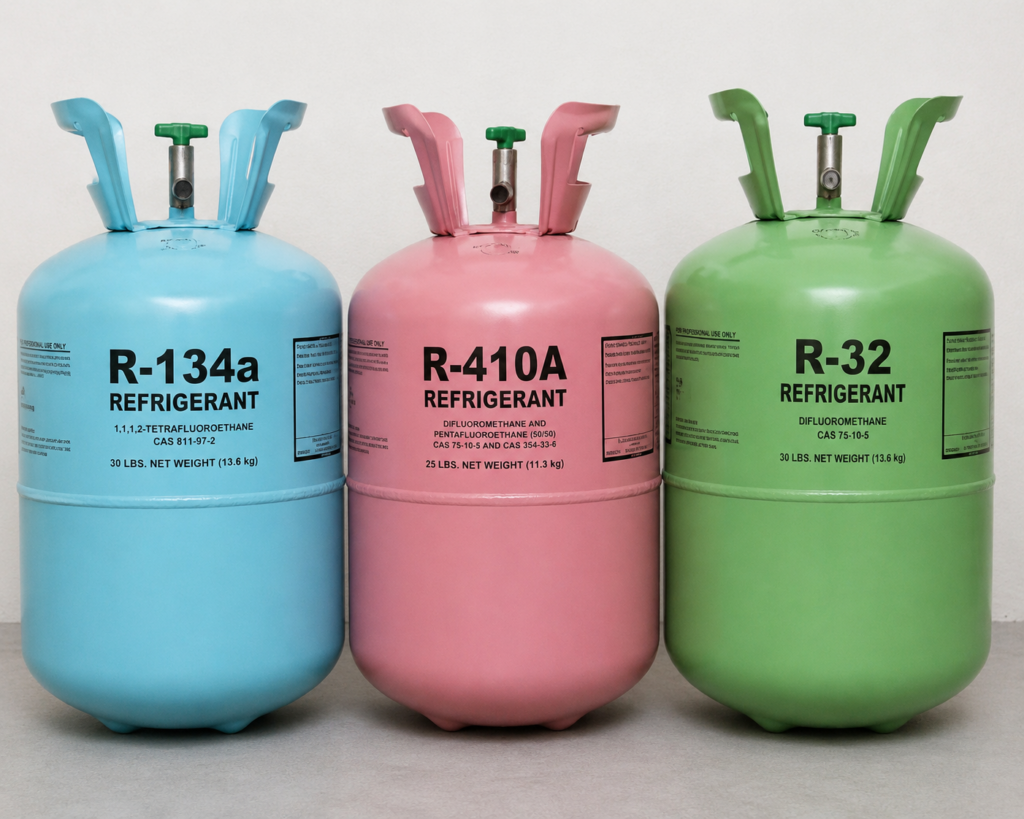
A substance called a refrigerant is used in the refrigeration cycle. A refrigerant is a fluid that can easily change between liquid and vapor states while absorbing and releasing large amounts of heat. Common refrigerants include R-134a, R-410A, and R-32. Choosing the proper refrigerant plays an important role in the efficiency and performance of the system.
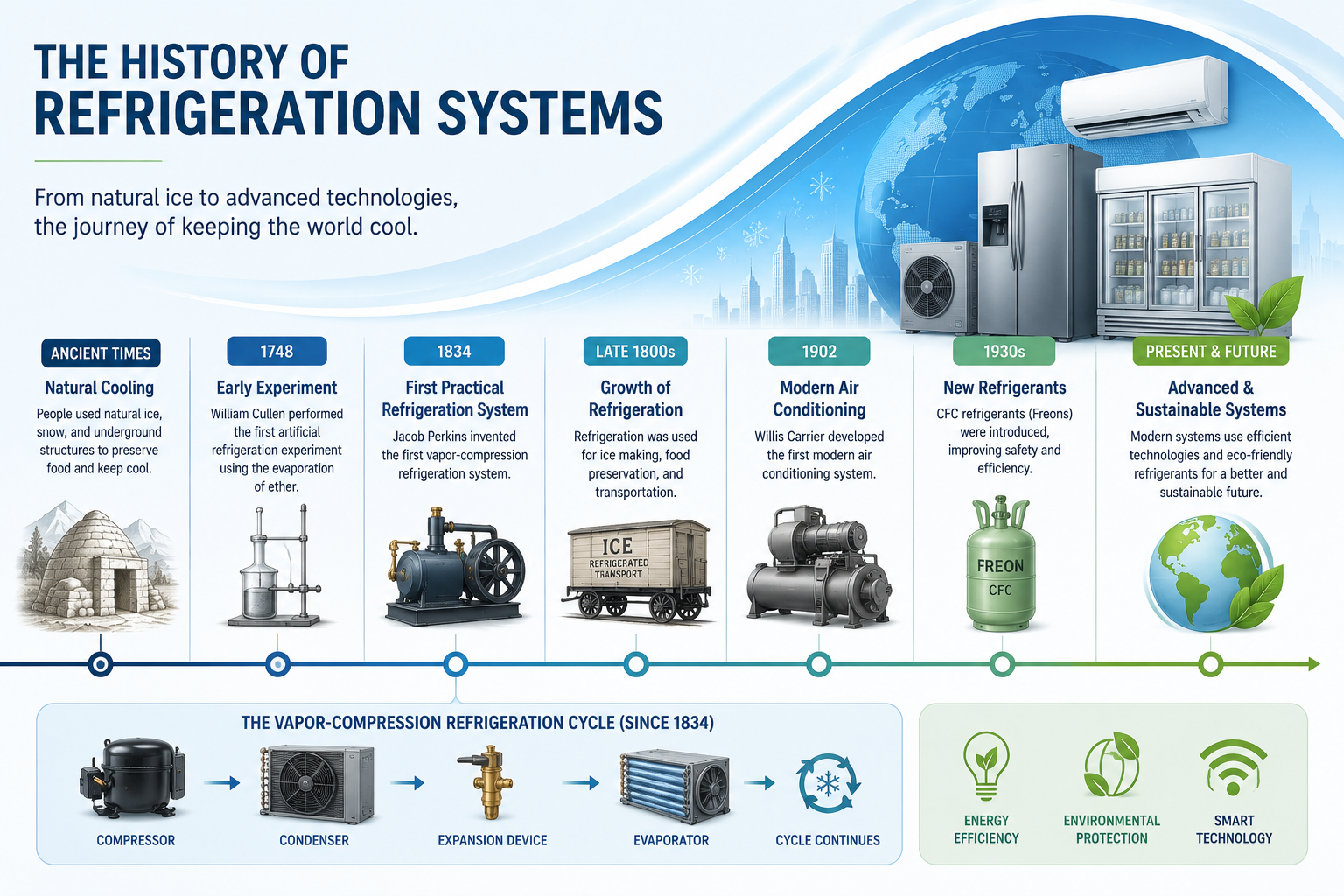
The refrigeration cycle consists of four main components: the compressor, condenser, expansion valve, and evaporator.
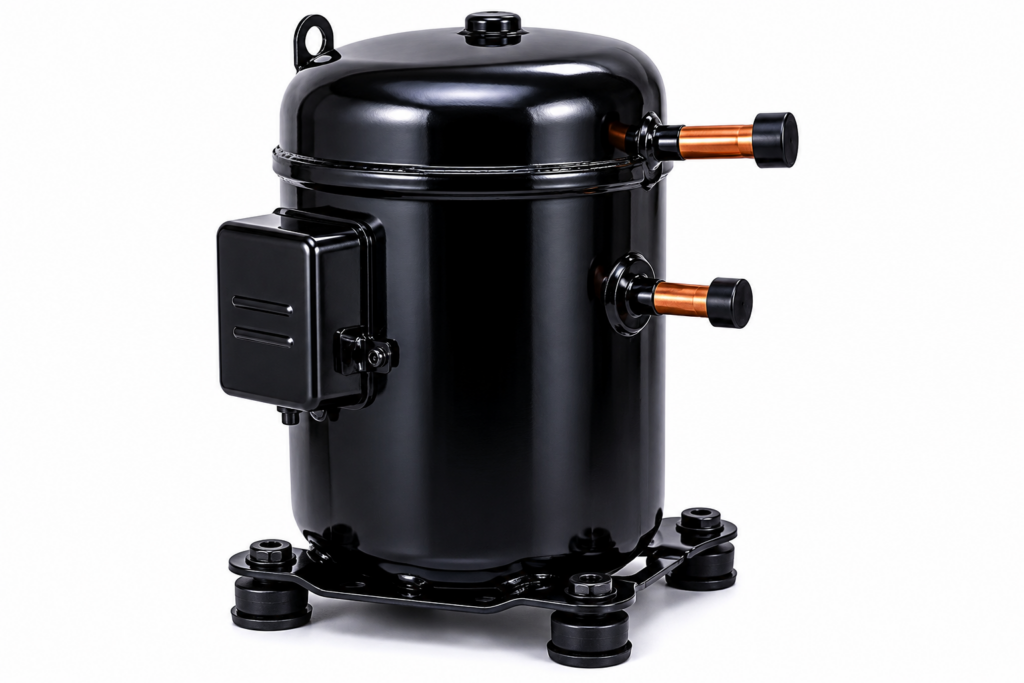
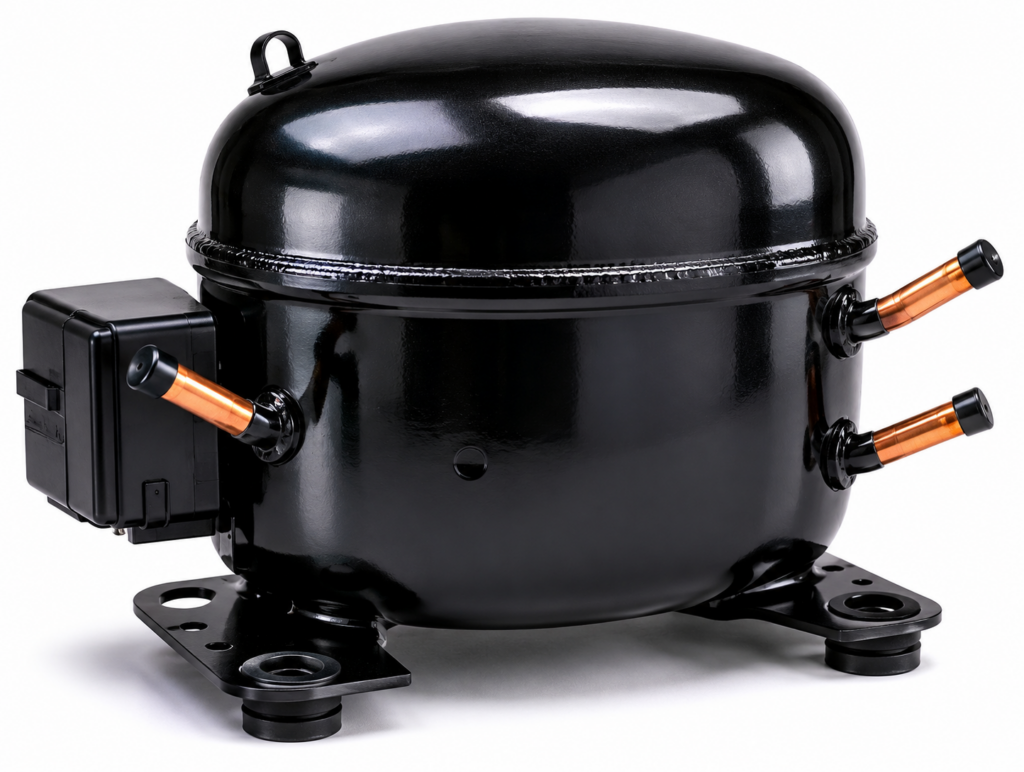
The compressor is considered the heart of the refrigeration system. It receives low-pressure, low-temperature refrigerant vapor from the evaporator and compresses it, increasing both its pressure and temperature. The high-pressure refrigerant vapor is then sent to the condenser.
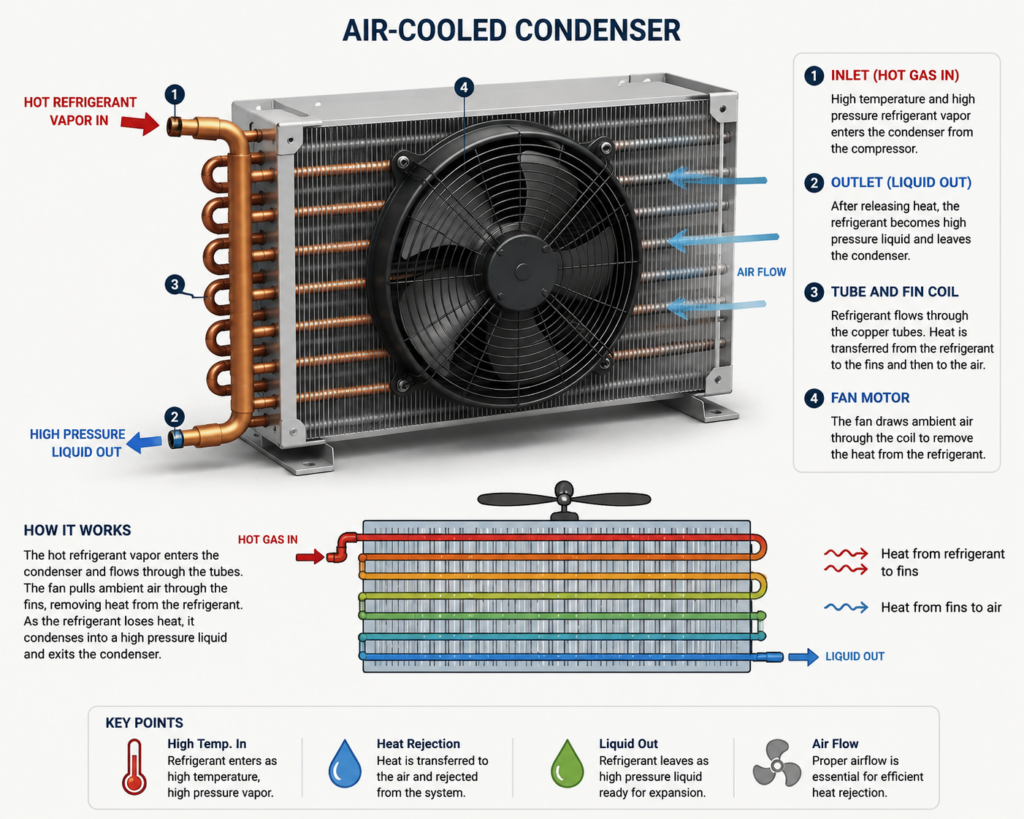
The condenser is usually located at the back of a refrigerator or in the outdoor unit of an air conditioner. In this component, heat is transferred from the refrigerant to the surrounding air. As the refrigerant loses heat, it changes from a vapor into a liquid. This process is called condensation.
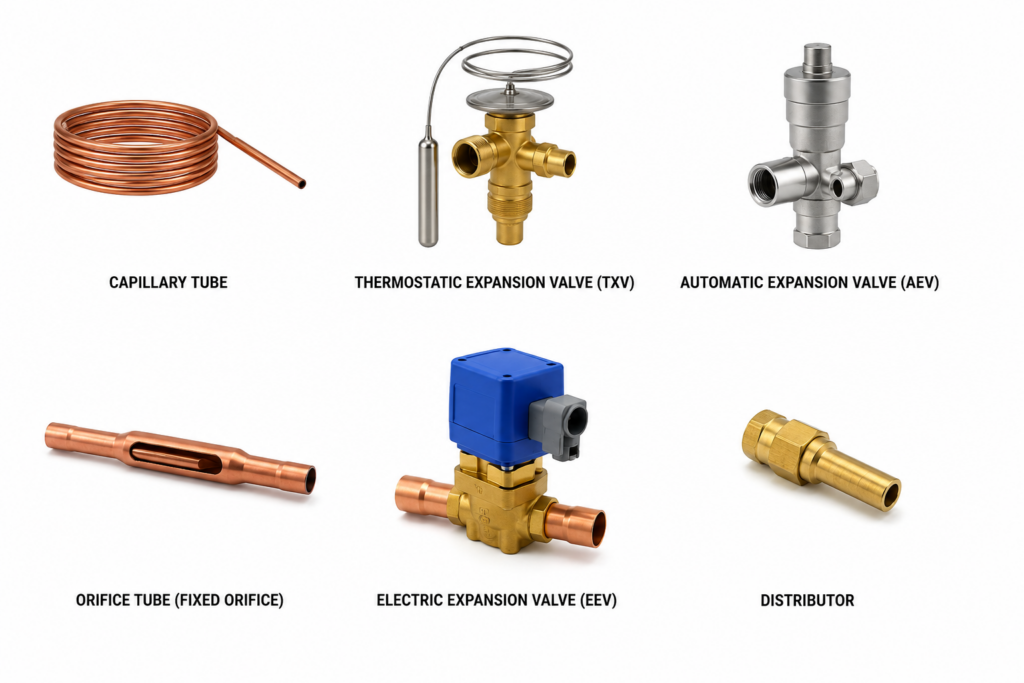
After leaving the condenser, the liquid refrigerant enters the expansion valve. The function of the expansion valve is to reduce the refrigerant pressure suddenly. As the pressure drops, the refrigerant temperature also decreases significantly, preparing it to absorb heat.
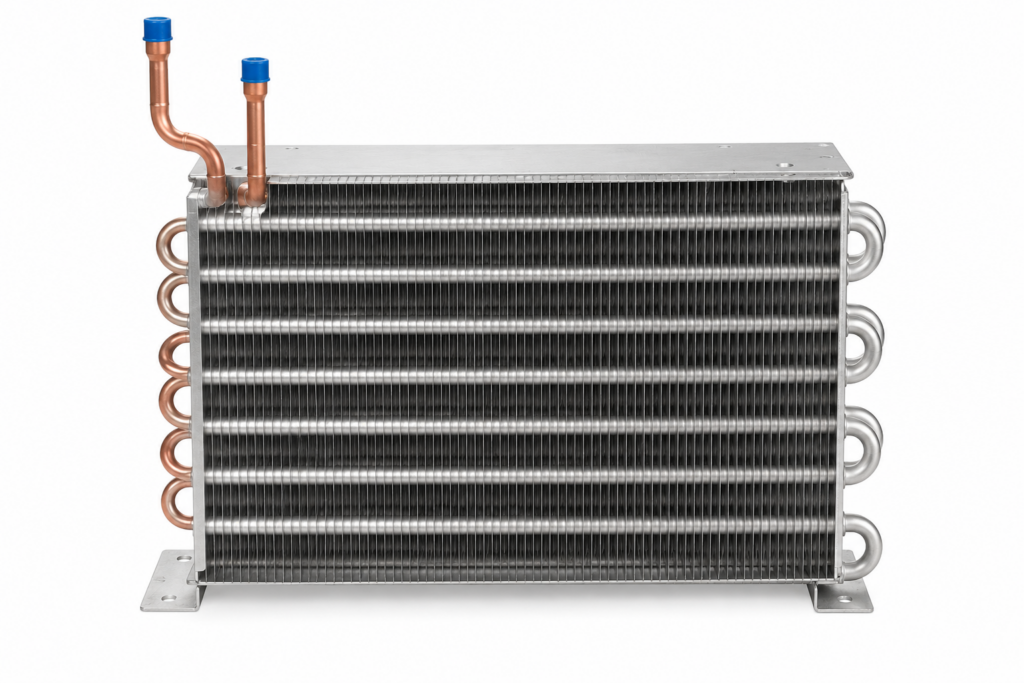
Next, the cold refrigerant enters the evaporator. The evaporator is located inside the refrigerator, freezer, or air-conditioning unit. In this component, the refrigerant absorbs heat from the surrounding environment and evaporates into a vapor. As a result, the area around the evaporator becomes cold.
After the refrigerant has completely evaporated, it returns to the compressor as a low-pressure vapor, and the cycle begins again. This process continues continuously to maintain the desired temperature within the refrigerated space.
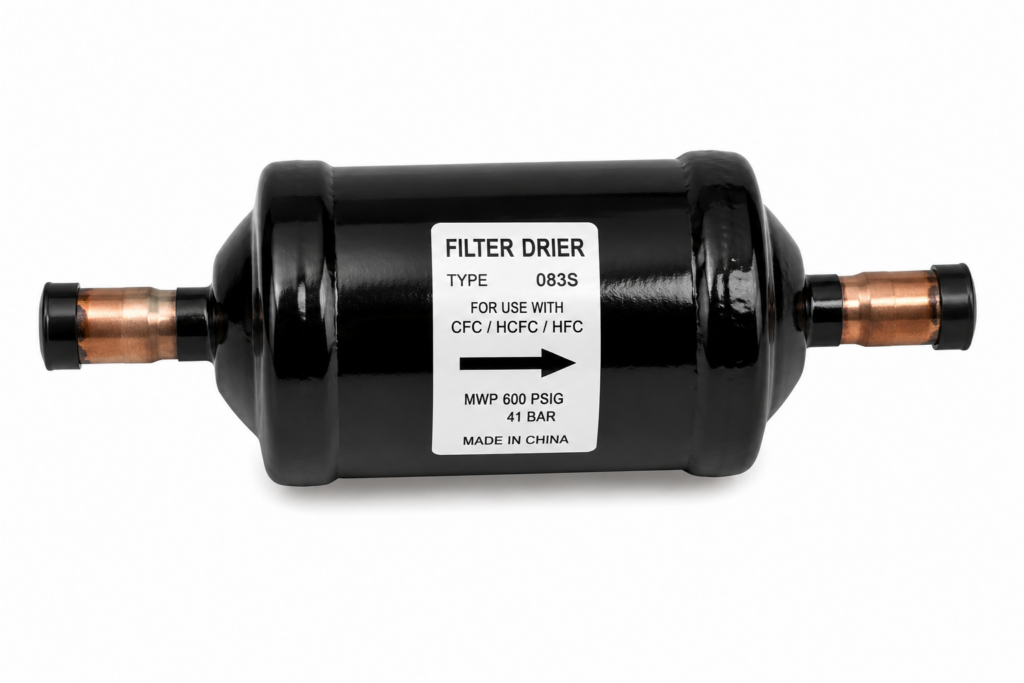
In addition to the main components, many refrigeration systems include other parts such as a filter-drier, capillary tube, condenser fan, evaporator fan, thermostat, and control devices. These components improve efficiency, provide better temperature control, and protect the system from damage.
Today, refrigeration systems play a vital role in everyday life and in many industries. Food preservation, storage of medicines and vaccines, building air conditioning, and industrial cooling processes all rely on refrigeration technology. Therefore, understanding the refrigeration cycle and its components is very important for students and technicians in technical and engineering fields.
Comments
Be the first to comment.
Leave a comment